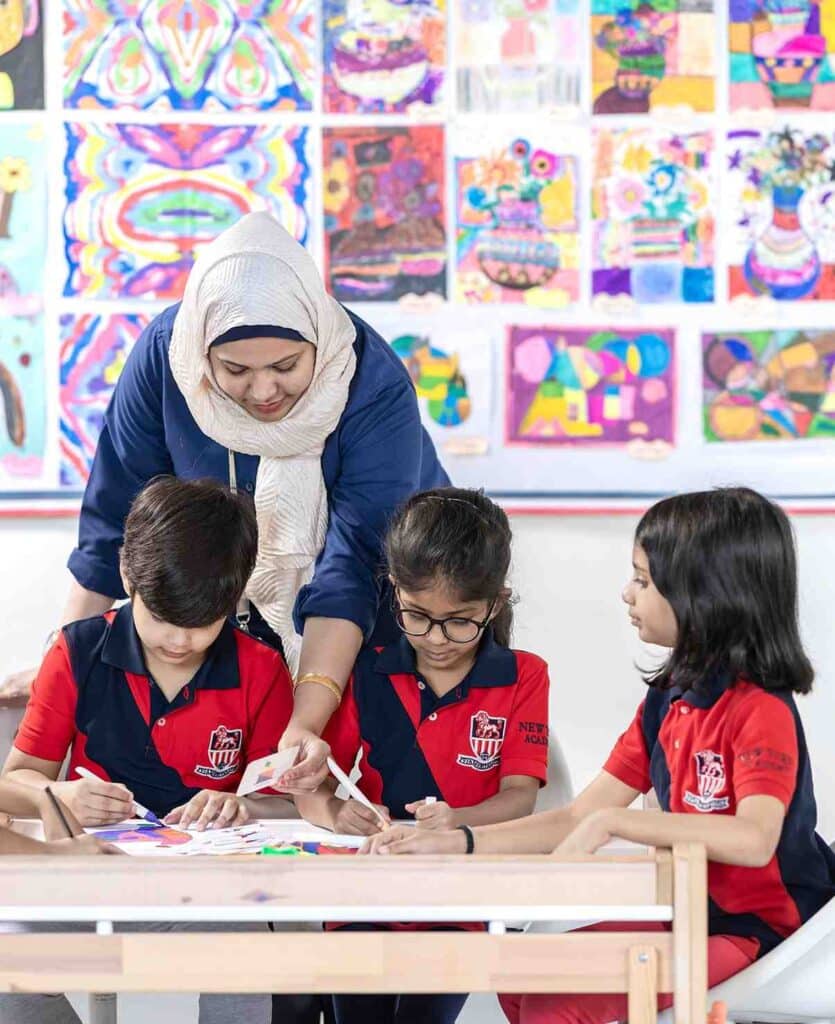
At NYA, our approach to teaching and learning is grounded in a safe, inclusive, and supportive environment where every student is known, valued, and encouraged to thrive. We differentiate learning to meet each student’s academic, social, emotional, and well-being needs.
Our academic programs are designed around our Change Maker Model, an integrated approach to learning that prepares students to become thoughtful, creative, and responsible contributors to an ever-changing world. Inspired by design thinking, the model develops higher-order thinking skills such as creating, analyzing, evaluating, and problem-solving.
Students engage in dynamic and diverse learning experiences that encourage them to explore real-world challenges, ask meaningful questions, think critically, collaborate with others, and adapt to change. Through inquiry, hands-on projects, and purposeful collaboration, students develop creativity, resilience, communication skills, and the confidence to lead with insight and empathy.
Technology plays an important role in enhancing learning. Students are encouraged to use digital tools purposefully and responsibly, including the ethical and appropriate use of artificial intelligence. Technology helps personalize learning, deepen understanding, foster creativity, and develop essential digital literacy skills for the future.
Early Years Centre
The Pre-School (6 months to 5 years)
Our curriculum is thoughtfully designed to nurture the balanced development of both the left and right sides of the brain. Through Montessori-based, reality-driven and hands-on learning experiences, children strengthen left-brain skills such as logic, concentration, sequencing, problem-solving, and early numeracy and literacy. At the same time, Reggio Emilia-inspired, child-led and inquiry-based approaches encourage right-brain development by fostering creativity, imagination, emotional expression, collaboration, communication, and critical thinking. By integrating structure with creativity, the curriculum supports holistic brain development, helping children grow into confident, curious, and well-rounded learners.
Assessment in preschool is continuous, child-centered, and observation-based rather than test-driven. In Montessori, teachers assess learning by closely observing children’s engagement with materials and recording skill development through notes, checklists, and work samples, with a focus on independence and individual progress. In the Reggio Emilia approach, assessment is carried out through rich documentation such as photographs, videos, conversations, and project work—to understand children’s thinking, creativity, and collaboration. Together, both approaches emphasize the learning process, individual growth, and holistic development rather than grades or comparison.
Assessment in the Early Years
Assessment in our Early Years program is continuous, child-centred, and observation-based rather than test-driven. We focus on understanding each child’s development, interests, strengths, and emerging needs.
Teachers observe children as they engage with learning materials, interact with others, communicate their ideas, and participate in activities. Learning is documented through observations, notes, checklists, work samples, photographs, conversations, videos, and project work.
These observations help teachers understand each child’s progress and plan meaningful next steps. Families are kept informed about their child’s development through regular communication and learning documentation.
Our assessment approach celebrates individual growth, the learning process, independence, creativity, and holistic development rather than grades, competition, or comparison.
Elementary School
Grades 1–5 | 6–10 Years
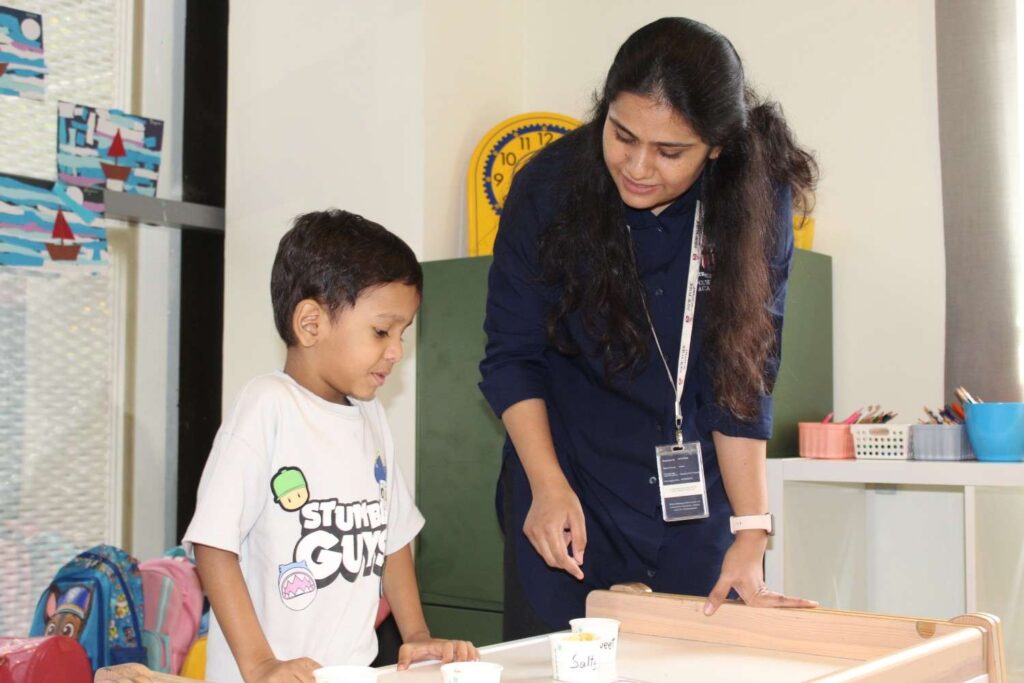
Our Elementary School provides a vibrant, stimulating, and supportive learning environment where students develop strong academic foundations while growing into compassionate, curious, confident, and globally minded learners.
Our transdisciplinary and interdisciplinary approach organizes learning around inquiry-driven units, enabling students to explore important concepts in depth and make meaningful connections across subject areas.
Through project-based learning, collaborative activities, hands-on experiences, and critical-thinking challenges, students learn to ask questions, investigate ideas, solve problems, communicate effectively, and apply their learning to real-world situations.
A Broad and Balanced Curriculum
Our elementary curriculum integrates core academic subjects with creative, technological, physical, and social-emotional learning.
Students engage in:
- English Language Arts
- Mathematics
- Science
- Social Studies
- IT & Robotics
- Visual and Performing Arts
- Music
- Modern Languages
- Physical and Health Education
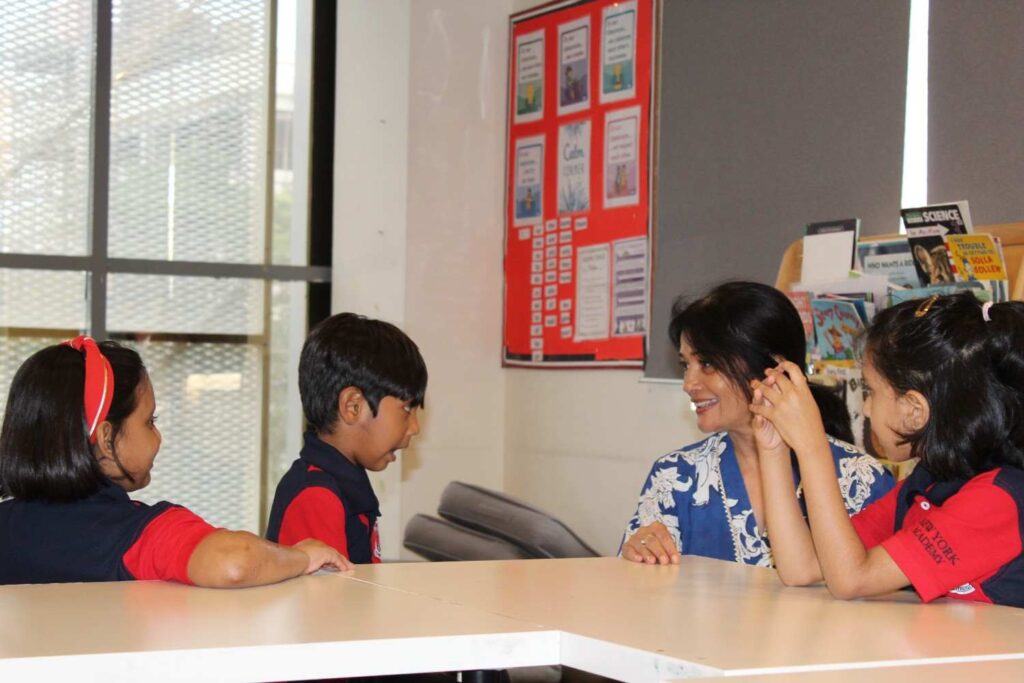
Beyond individual subject areas, students also engage in exploration units that transcend disciplinary boundaries, allowing them to inquire into big ideas from multiple perspectives and make meaningful connections across their learning. These experiences support a deep and holistic understanding of the world and the complex ideas that shape it.
This broad and balanced curriculum develops not only knowledge and academic skills, but also creativity, physical well-being, collaboration, communication, critical thinking, and confidence, preparing students to understand and contribute meaningfully to the world around them.
The Curriculum
The AERO (American Education Reaches Out) standards are designed to align American curriculum and instruction abroad with U.S. education expectations, making it easier for students to transition internationally while maintaining high academic quality. AERO standards follow the U.S. Common Core and other national standards frameworks and are structured by grade level and subject strands.
Key Features of AERO Standards
- Standards-Based : AERO uses clear, rigorous grade-level standards to guide curriculum and instruction.
- Internationally Aligned : Facilitates seamless transitions for students moving between international schools.
- Skill and Knowledge Focus : Emphasizes critical thinking, problem-solving, communication, and conceptual understanding.
Core Subjects Covered by AERO
1. English Language Arts (ELA)
- Reading: Literature and informational texts with comprehension and analysis
- Writing: Narrative, informative, persuasive writing
- Speaking & Listening: Collaborative discussions, presentations
- Language: Grammar, vocabulary, conventions
2. Mathematics
- Number and Operations
- Algebraic Thinking
- Geometry
- Measurement and Data
- Mathematical Practices (e.g., reasoning, problem-solving)
3. Science
- Physical Science (matter, energy, forces)
- Life Science (organisms, ecosystems)
- Earth Systems (weather, earth systems)
- Scientific Inquiry and Engineering Practices
4. Social Studies
- History (American, World)
- Geography
- Civics and Government
- Economics
5. Additional Areas Often Included
- Visual and Performing Arts
- Physical and Health Education
- Modern/Foreign Languages